Canadian Heritage Minister Steven Guilbeault has tried to deflect public concern
with the regulation of user generated content under Bill C-10 by claiming the intent is to make the “web giants” pay their fair share. Yet according to an internal
government memo to Guilbeault signed by former Heritage Deputy Minister Hélène Laurendeau released under the Access to Information Act, the
department has for months envisioned a far broader regulatory reach. The memo identifies a wide range of targets, including podcast apps such as Stitcher and Pocket Casts, audiobook
services such as Audible, home workout apps, adult websites, sports streaming services such as MLB.TV and DAZN, niche video services such as Britbox, and even news sites such as the BBC and CPAC.
fortunately one hopes anyhow, the government is a minority so we know what they pass today can be revoked very fast, but who ever wins the next majority government. we know it wont be NDP but Conservative but which version?
in any case, rest assured! who ever is in power will only remain honest to the extent they are forced to! by the constituents and others who put them there in the
first place,
and with 'minority' governments one never knows what might come?
House Democrats back away from delaying Israel arms sale amid Gaza conflict
The Biden administration will brief lawmakers on the proposed $735
million sale of JDAM guidance conversion kits and other weapons
equipment.
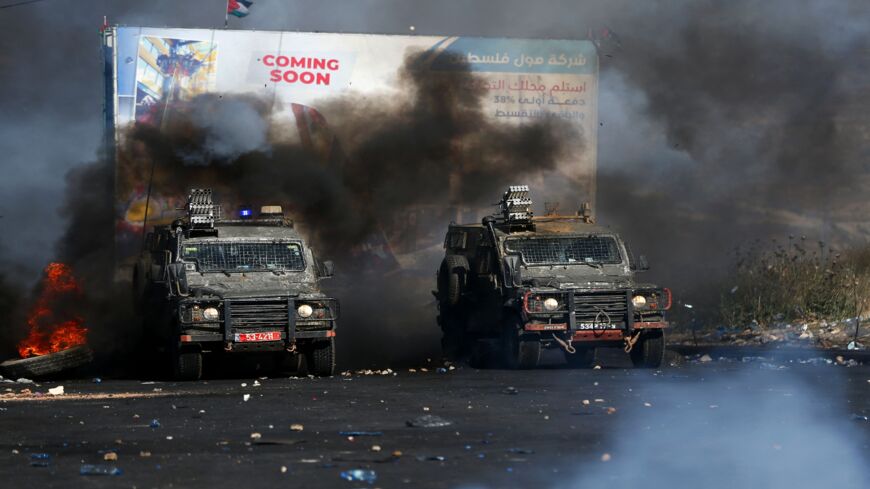
Israeli security forces deploy to
disperse Palestinian protesters amid clashes near the settlement of Beit
El and Ramallah in the occupied West Bank on May 18, 2021. - ABBAS MOMANI/AFP via Getty Images
Democrats
in the House appeared to back away from a plan to urge the Biden
administration to delay a proposed $735 million arms sale to Israel amid
the ongoing conflict with the Gaza Strip on Tuesday.
House Majority leader Rep. Steny Hoyer (D-MD) and Foreign Affairs
Committee chairman Rep. Gregory Meeks (D-NY) will not send a letter
requesting the sale’s delay after the Biden administration agreed to
brief committee members on the matter, ABC News reported.
Meeks was set to request a delay that could give lawmakers time to place a hold on the sale, Vox's Alex Ward first reported yesterday.
The Biden administration formally notified Congress of the plan to
grant Boeing a license to directly sell $735 million worth of weapons
equipment, including JDAM bomb guidance kits, on May 5, nearly a week
before the conflict with Gaza began.
But the sale proposal was not publicly announced, in line with policy
on direct licensing contracts of that time, according to a US official.
Chairman Meeks called an emergency meeting on Monday night after The
Washington Post revealed the sale proposal. The Post reported that some
Democrats on the Foreign Affairs panel had only learned of the planned arms sale over the weekend, leaving insufficient time before the Thursday deadline to consider initiating a hold.
It is not clear when the administration's briefing will be held.
“The chairman’s intention behind a possible letter was to create an
opportunity for members to engage in a candid conversation with the
administration about the arms sale," a spokesperson for the House
Foreign Affairs Committee told Al-Monitor via email.
"A letter is no longer necessary given that the White House has now
agreed to engage with members at the highest level on their concerns,
and [on] the administration's broader strategy on gaining a peaceful
resolution to this conflict,” the spokesperson wrote.
House Democratic leadership's decision not to push for the delay
makes the arms deal all the more likely to pass, as the JDAM sale has so
far aroused little objection in the Senate despite calls for an
immediate cease-fire by a majority of Senate Democrats.
But a briefing is unlikely to quell the growing wave of skepticism among progressives
over broad US support for Israel amid the Benjamin Netanyahu
government’s continued policies of settlement and blockade of the
Palestinian territories, both widely deemed illegal under international
law.
The current violence between Israel and Gaza has roots in the
stunted, decadeslong peace process, which has been a low priority for
the Biden administration as it focuses on negotiations with Iran to
limit its nuclear program.
So far, some 200 Palestinians and 12 Israelis have been killed in the
violence that erupted last week when Hamas launched rockets into Israel
in response to an Israeli police raid on Jerusalem’s Al-Aqsa Mosque and
attempts to displace Palestinian families from Sheikh Jarrah.
During a phone call with Netanyahu on Monday, President Joe Biden
expressed his support for a potential cease-fire for the first time
since the conflict began a week earlier. The United States on Monday
blocked a third attempt by the United Nations Security Council to issue a
statement calling for an immediate cease-fire between Israel and Hamas.
The UN's humanitarian aid agency said Tuesday that Israeli
bombardment of Gaza has displaced an estimated 52,000 people. Israeli
officials allowed some humanitarian aid and fuel supplies to enter into
the besieged strip on Tuesday following the UN's warning that Gaza's
only power plant was running out of diesel.
Israel’s government rejected Hamas’ proposal for a mutual cease-fire last week. Netanyahu signaled again
on Tuesday that his government will continue its campaign of airstrikes
in Gaza until Palestinian militants' rocket attacks are quelled.
Resistance movements in Gaza are responding to a wave of popular anger over Israeli provocations in Jerusalem and at al-Aqsa.
Bashar TalebAPA images
As
I write, the building I live in here in Gaza is shaking continuously.
Above us, Israeli F-16 warplanes pummel us with a seemingly endless
barrage of bombs.
I am writing amid a rapid flow of developing events, so it is certain
that by the time this is published, many things may have changed, but I
am trying to highlight the general features of this current round of
escalation in Palestine.
The escalation began in Jerusalem during the month of Ramadan, in a
series of provocations carried out by the Israeli occupation
authorities.
The first in this series was the decision to prevent Palestinians
from gathering at Bab al-Amoud (Damascus Gate) in Jerusalem in late
April. This sparked a series of protests which eventually forced Israel to rescind the order.
Another – ongoing – provocation, which drew some international attention, is the expulsion orders pending against Palestinian families from their homes in Sheikh Jarrah that Israeli courts have granted to Israeli settlers.
A third Israeli provocation was the storming of al-Aqsa mosque
during prayers on the morning of Friday, 7 May. Israeli forces fired
tear gas and rubber-coated metal bullets onto worshippers, resulting in
over 200 injuries.
In a fourth provocation, settlers announced that on 10 May they would march through Jerusalem to celebrate what they term Jerusalem Day. The intention was to march near al-Aqsa mosque.
This march escalated into a fifth provocation on the morning of 10
May as, for the second time in a week, Israeli forces stormed al-Aqsa, attacking worshippers praying inside and ransacking the sacred site. More than 300 Palestinians were injured.
A wave of anger
These provocations persisted throughout Ramadan, and caused a wave of
anger to sweep through Palestinians across their homeland. Protests
broke out in Haifa, Jaffa, Ramallah and Gaza.
In Gaza, demonstrators called on the Qassam Brigades, the armed wing
of Hamas, to intervene. Palestinians in Gaza strongly supported the need
for a swift response by resistance factions to retaliate for the
violations in Jerusalem.
I read what seemed like hundreds of messages from activists on social
media asking Hamas why they were late in retaliating. Taxi drivers and
shopkeepers, ordinary folks on the street: Everyone was posing the same
question.
Eventually, Qassam issued a warning that Israeli troops had two hours to evacuate al-Aqsa, lift the siege of the murabitoun – the faithful who remain at the site around the clock in order to protect it with their presence – and release all prisoners.
As the deadline expired, and Israel failed to respond, Qassam fired a burst of rockets towards Jerusalem.
The Israeli military responded by bombarding the city of Beit Hanoun in the northern Gaza Strip.
Nine people, including three children, were killed there as they were preparing to break their fasts.
Gaza freedom fighters kept retaliating and Israel expanded its bombardments to include residential homes.
The Israeli air force destroyed several residential towers that also accommodated dozens of media offices and commercial establishments.
Israel also attacked police offices and several government buildings, all civilian targets.
Why it’s different
The current escalation is distinguished by the fact that the
Palestinian people demanded a response to the practices of the Israeli
occupation. Hamas, in responding, is being considered heroic.
There is no public judgment or denunciation of Hamas’ decision to
act, even when citizens are paying the harshest price of Israeli
aggression, losing their loved ones and their homes.
It is clear in Gaza that Palestinians remain firm in their belief in resistance as the pathway to liberation from occupation.
This round of fighting is also significant because it came as a response to continuous violations in Jerusalem.
All previous rounds of Hamas escalation have been provoked by Israeli
aggression on the Gaza Strip. Thus, when Jerusalem called for Gaza’s
aid, and Gaza rose to defend Jerusalem, this amplified the burgeoning
sense of Palestinian national unity and liberated the Palestinian
resistance from its isolation in Gaza.
Whether in Gaza or anywhere else in Palestine, Palestinians struggle
against the occupation, whose attacks and violations affect them
everywhere.
This escalation has also been characterized by an increasingly
defiant spirit within the resistance factions. The cancelation of the
“Jerusalem Day” march was an early victory.
The reality of suffering and tragedy is always present in Israeli
aggressions on Gaza. Still, this time, the escalation feels meaningful,
it feels heroic.
People across Palestine desperately needed someone to make them feel
supported and defended. Palestinians need to feel they are not paying
the price alone. It is therefore hugely significant that resistance has
exploded across historic Palestine.
Israel has been committed to destroying the Palestinian identity,
especially in deliberately economically deprived cities, towns and
villages inside the 1948 boundaries – the areas where the state of
Israel was declared that year, during the Nakba, the ethnic cleansing of
Palestine.
Mass protests in those areas, the torching of police stations and the
replacement of Israeli flags with Palestinian flags, all seem like a
new revival of the Palestinian spirit.
Palestinians are still deeply rooted in their land, clinging to their
identity, their deep sense of unity is more significant than any
factors that may divide, and their ability to survive Israel’s terror
and crimes never ceases to amaze.
Israel has a powerful arsenal of missiles, and in an attempt to
recover lost dignity in the face of Palestinian resistance, Israel
continues to commit crimes against civilians in Gaza.
Yet, Israeli power does not ensure legitimacy or stability. The
Zionist project in Palestine is alien to this land, and all efforts to
neutralize or eject the Palestinian presence have failed for more than
70 years.
The Palestinian people may weaken, but they will not die. They have the will to fight until the end and certain victory.
Ahmed Abu Artema is a writer who lives in Gaza and a researcher at the Center for Political and Development Studies.
Home | Opinion
Gideon Levy published at Haaretz
May. 13, 2021 3:56 AM
Every “round” brings with it its own bloodthirsty ones, during every round they exit their holes like mice, remove their politically-correct masks, and their true face is exposed
to all: All they want is to see blood. Arab blood, as much as possible – blood, the more the better – blood, the main thing
is that Arab blood is spilled. Residential towers are collapsing like houses of cards in Gaza, and ruined worlds
beneath them are a mild joke for them. They want to see blood, not only ruins, fear and destruction.
Dozens of dead
during the first 24 hours, about half of them women and children, are nothing to them. They want much more blood. Until rivers of blood flood Gaza, and with it Lod, if possible,
their appetite will be only partially satiated. Until the Palestinians get down on their knees, bow down before Israel and surrender to it without conditions, for eternity –
they won’t be satisfied. They want a victory photo, the victory of the lie that they so greatly desire, and that will never be attained.
The end of Bibi? LISTEN to Anshel Pfeffer’s quick-fire guide to the latest political drama
Those
who thirst for blood ones are divided into two groups: the security mavens and the racists. They flood the TV and radio studios and the social networks with large forces, generals, commentators, experts – during wartime there are no other
spokespersons – and everything incites towards more and more of this thing, war, never mind why, never mind for what purpose. The main thing is that we’ll drink their blood.
The security mavens want as much war as possible because
in their heart of hearts they like wars, those are their strongest memories. A war that is never enough for them, just to hit them, to prove that we’re strong. All the wars in Gaza and Lebanon, which didn’t accomplish anything,
didn’t teach them anything either. They stick to their guns. If only we had listened to them at the time, there would have been tens of thousands of dead, and only then would the
desired victory have been attained, which will never be attained.
Like fata morgana in the desert, they approach victory, and it distances itself from them. It will never be
attained by force. Since we didn’t listen to them, they’re trying again. To strike and smash, a ludicrous caricature from the mouths of those who were once generals, or those
who dreamed of being generals and weren’t.
The statesmanlike journalist Danny Kushmaro, who ordinarily won’t reveal his opinion about anything, innocently asks:
“Why does Yihya Sinwar [Hamas leader in the Gaza Strip] still have a home?” If only people would listen to the voice of the man on the motorcycle, Sinwar would no longer have
a home, a wife, children, neighbors, like all his deceased predecessors, and then we would win.
Of course we would win. From journalists Nahum Barnea (“hit hard, forcefully”) to Roni Daniel (“Let’s stop being amazed by some sight or other”) and Amir Buhbut (“That’s not how to land a harsh, painful blow”), every guy can be a soldier, they all want only more and more combat action by men’s men who never cry, not even at night. They sit on the hilltops surrounding Gaza like a chorus of cheerleaders and cheer the forces who will kill civilians and fighters in the penned-in ghetto, just give them more and more.
Neither Israel nor Hamas will back down
'There's systematic expulsion of Arab society in Israel, and we've reached a boiling point'
Israelis have come to expect prosperity
. Rocket war could change that
The second group is the racists. “Two Arabs were killed in Lod by a missile launched by Hamas. I call that poetic justice. … Too bad it was only two,” tweeted journalist Shimon Riklin on Wednesday
regarding the killing of two Israelis, a father and his
daughter. “Why don’t they reduce the electricity in Gaza to 10 percent? Let them sit in the dark and suffer. Let them stand in the heat and suffer, and in general let them suffer.”
Riklin has an objective, which is both a contemptible war crime and pointless as well. Ben Caspit, on the other hand, is
presumably a centrist journalist, and he screamed at the imam of Lod: “We really have to hit you hard, and show you who’s the boss here, show you that you don’t burn anything belonging to Jews in Israel.”
The lordly, ugly face is bared. Who’s the boss here, you don’t burn what belongs to the Jews. You don’t wake them up in the middle of the night
with sirens either.
The Jewish state, the 2,000-year dream. Let the IDF win already.
The White House press corps laughed and praised US President Joe
Biden, after he joked about running over a reporter who asked a
question about the Israeli-Palestinian conflict as he tested an electric
Ford pick-up truck.
Video from a Ford testing
site in Dearborn, Michigan, shows Biden driving the F-150 Lightning
truck model on a test runway, with the White House correspondents
throwing him softball questions and laughing along – except for one
female reporter.
“Mr. President, can I ask you a quick question on Israel before you drive away since it’s so important?” she can be heard asking.
“No you can’t. Not unless you get in front of the car as I step on it,” Biden replies, to laughter from the reporters. “I’m only teasing,” he added, then drove off, ignoring the question.
The press gathered at the testing site for an “unscheduled stop,” and White House press secretary Jen Psaki wouldn’t say if Biden would be the test-driver.
Among the questions he was asked upon driving up were “Would you buy one of these?” and “How does it feel behind the wheel?”
After he drove off, the gaggle could be heard laughing and calling the whole thing “fantastic,” with someone calling Biden “best test driver ever.”
There
were no complaints about a threat to murder a reporter – even if made
in jest – that would have been the talk of all cable channels had it
been made by his predecessor Donald Trump.
The
president was visiting Michigan on Tuesday to announce an ambitious
push for switching the US auto industry – which has fallen on hard times
in recent decades – over to electric cars.
“The future of the auto industry is electric. There’s no turning back,” Biden said at the Ford plant in Dearborn.
While Biden’s cabinet has proposed a $2 trillion infrastructure proposal, critics have pointed out that only 5% of that investment would go towards roads and bridges, while the vast majority would be spent on “social engineering” programs.
On Monday, major outlets reported that the Biden administration
has green-lit the sale of $735 million worth of bombs and missiles to
Israel. The news came as Israel and the Gaza-based Hamas and Islamic
Jihad militants continued to exchange fire in a week-long conflict
sparked by protests in Jerusalem.
Think your friends would be interested? Share this story!